We will be closed from 3 PM on Friday 19th December 2025 and will re-open on Monday 5th of January 2026 at 8 AM. A walk-in emergency clinic will be available on Monday 29th December 2025 from 9 AM to 12 PM. We wish you and your families a safe and very Merry Christmas and a Happy New Year!
 Patient Forms
 REFERRALS
Angel Aligner vs Invisalign®: What’s the Difference and Which Is Right for You?
Clear aligners have changed how orthodontic treatment feels for many teens and adults in Perth. They are discreet, removable and designed around your day. Still, not all aligner brands are the same, and the brand on the box is only part of the story.
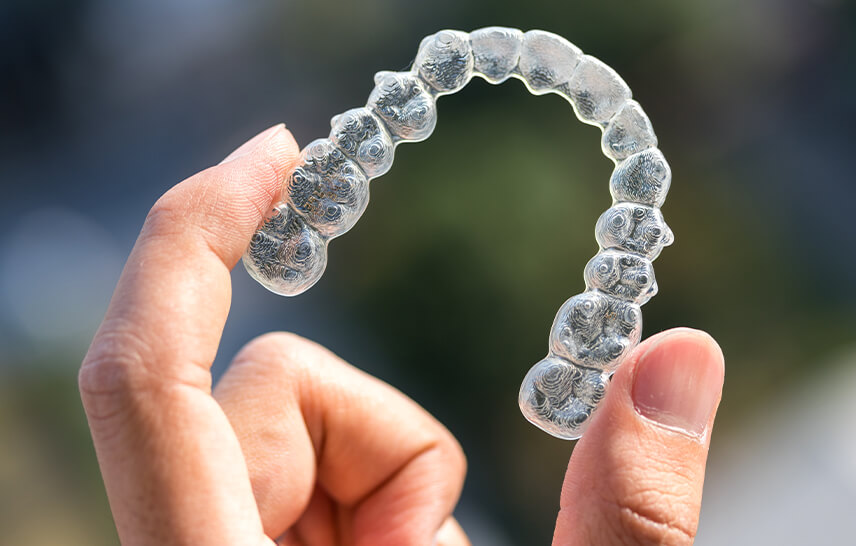
This guide compares Angel Aligner and Invisalign® in plain English. It explains how aligners move teeth, where the planning differences sit, and when a Specialist Orthodontist might recommend braces instead. Most importantly, it shows why specialist-led planning and monitoring often matter more than the logo on the tray.
If you live in Ellenbrook or Perth’s northern suburbs, the team at Ellenbrook Orthodontics provides both braces and clear aligners, with treatment personally planned and reviewed by a Specialist Orthodontist.
How Clear Aligners Move Teeth
Both Angel Aligner and Invisalign® use a series of custom plastic trays to apply gentle, staged forces. You wear each set for about one to two weeks, usually 20 to 22 hours per day. Gradual changes in tray shape guide teeth into position.
Key elements behind the scenes:
- Attachments: Small tooth-coloured shapes bonded to certain teeth. They act as handles so trays grip and move teeth with precision.
- Staging: The sequence and size of each planned movement. Good planning limits how far each tooth moves per stage to keep forces safe and predictable.
- Elastics: Small rubber bands sometimes used with aligners to fine-tune how upper and lower teeth fit together. They can help correct overbites, underbites and some crossbites.
- IPR, or interproximal reduction: Polishing between teeth to create tiny amounts of space when needed.
These tools are similar across brands. The difference is in the planning philosophy, material properties and the clinician’s strategy for your specific bite.
Angel Aligner and Invisalign®: What Differs in Planning and Materials
While both systems are digital and 3D scan led, there are practical differences a specialist considers.
- Software and set-up: Each brand has its own planning platform. Invisalign®’s ClinCheck and Angel’s planning software both let the orthodontist design tooth movements, attachment shapes, staging and use of elastics. The interfaces differ, but the critical factor is the orthodontist’s diagnosis and plan rather than the software itself.
- Materials: Aligner plastics vary in thickness, flexibility and how they hold force over time. Invisalign® uses a proprietary multi-layer plastic designed to deliver consistent forces between changes. Angel Aligner also uses advanced thermoplastic materials. Subtle material differences can influence comfort, grip on attachments and how often trays are changed, but both aim for controlled, gentle movement.
- Refinements: Most aligner cases need at least one refinement phase to perfect details near the end. The ease and speed of refinements depend on clean scans, accurate wear, and responsive planning, not only on brand choice. At Ellenbrook Orthodontics, refinements are built into the process so small tweaks are expected and managed.
- Accessories: Precision cuts for elastics, bite ramps and other auxiliaries exist in both systems. Your orthodontist selects what your bite needs rather than what a brand pushes.
Bottom line, both Angel Aligner and Invisalign® can deliver excellent results when the case is suitable and the plan is Specialist Orthodontist led.
Is Angel Aligner as Good as Invisalign®?
For the right case, Angel Aligner can be comparable to Invisalign® in effectiveness. The better question is which system best supports the plan your orthodontist designs for your mouth. Case selection, accurate staging, patient wear and consistent specialist monitoring drive outcomes more than the brand itself. Some complex issues, such as significant bite correction or large tooth movements, may suit one system or braces more predictably. Your Specialist Orthodontist will explain why.
How the Brand Choice Is Made at Ellenbrook Orthodontics
Your journey starts with a comprehensive assessment. The Specialist Orthodontist reviews your photos, 3D scans, x-rays and bite. They diagnose the underlying issues, then choose the appliance that will achieve those movements most predictably. That may be Invisalign®, Angel Aligner or braces.
During treatment, you will have check-ins to confirm teeth are tracking as planned. If a tooth is off track, the plan is adjusted. Refinements are used when needed to dial in the finish. This specialist oversight is what turns clear aligners from a product into a treatment.
Who Suits Aligners vs When Braces Are Recommended
Clear aligners suit many adults and teens who want discreet treatment and can wear trays as directed. They work well for crowding or spacing, mild to moderate bite discrepancies, and relapse after previous orthodontics.
Braces are often recommended when:
- Significant bite correction is needed, especially when jaw growth or surgical planning is involved.
- Teeth require complex movements such as major rotations, root changes or vertical corrections that are more predictable with fixed appliances.
- Compliance is a concern and a non-removable solution is safer for progress.
If braces are right for you, there are modern options including metal and ceramic.
Typical Timelines and What to Expect
Timelines vary by complexity. Many aligner cases take about 6 months to 2 years. Braces commonly run 1 to 3 years. These ranges are guides only. Your personal estimate will be given after a full assessment. Progress depends on biology, planned movements, and how consistently aligners are worn.
At Ellenbrook Orthodontics:
- Aligners are worn 20 to 22 hours per day.
- Reviews are scheduled to match your plan. Many aligner patients have fewer in-person adjustments than braces patients, but Specialist Orthodontist oversight remains essential.
- Refinements are common and accounted for, helping achieve a more polished finish.
Local, Specialist-Led Care in Ellenbrook and Northern Perth
Patients consistently tell us they value seeing the same Specialist Orthodontist, clear explanations and a warm team. That continuity makes a difference when plans need a small tweak or a change in sequence to keep things on track.
You can meet a Perth Specialist Orthodontist for a full assessment, including a discussion of aligners and braces side by side, finance options, and expected timelines.
FAQ
- How does Angel Aligner work compared with Invisalign®? Both use staged, removable trays with attachments, planned movements and sometimes elastics. Differences lie in software interface and plastic properties. In skilled hands, both can be effective.
- Is Angel Aligner as good as Invisalign®? In suitable cases, yes. Predictability depends more on diagnosis, planning and monitoring than on brand. Some complex bites still suit braces best.
- Which is better for my case, braces, Angel Aligner or Invisalign®? It depends on your bite, tooth movements required and how much predictability is needed. Your Specialist Orthodontist will recommend the appliance that delivers your goals with the most control.
The Ellenbrook Orthodontics Approach to Planning, Monitoring and Refinements
- Planning: A Specialist Orthodontist diagnoses your bite and designs the sequence of movements, attachment shapes, IPR and elastic use where needed.
- Monitoring: Regular reviews check tracking and comfort. If a tooth lags, the plan is adjusted early.
- Refinements: Additional trays are used to perfect details. This is normal and part of a high quality finish, not a sign of failure.
This approach is consistent whether you choose Angel Aligner, Invisalign® or braces. The appliance is the tool. The plan and the Specialist Orthodontist behind it guide the outcome.
Ready to Compare Your Options?
Book a consultation to find out which option is right for you, and start with a clear, personalised plan that fits your life in Ellenbrook and northern Perth.
BackCONTACT US
Ready to transform your smile? Contact us!
Start your smile journey in Ellenbrook today.
Ellenbrook Orthodontics
62 Mornington Pkwy,
Ellenbrook WA 6069, Australia

Opening Hours
- Monday - Friday
- 8:00am - 5:00pm
- Saturday - Sunday
- Closed